
The envelope method · Step 2
How envelopes work
An envelope is a pot of money with a job. Here are the three kinds, and when to use each one.
What if every bill was already paid before it arrived, and Christmas never caught you short again? That's what envelopes do.
An envelope is a pot of money with a job to do. You decide how much goes in. There are three ways to use one.
1. The flexible envelope
For spending that changes from month to month, like food. Choose how much to put in each month. You may not know the right amount yet, and that's fine: put in what seems right. Over time, your average tells you what the amount should be.
2. The fixed target envelope
For bills with a due date, like rent or electricity. You know the amount and when it's due, and it repeats. Fill it before the date, and when the bill arrives, the money is already there.
3. The long-term goal envelope
For something you want, or might need, later: Christmas, a holiday, money for when the car breaks down. Set a goal level and the date you'd like it by, then fill the envelope up. Once it's full, it's full. If you take money out, say for a car service, top it back up over time. The aim is to keep it at that level.
In Smarter Budget
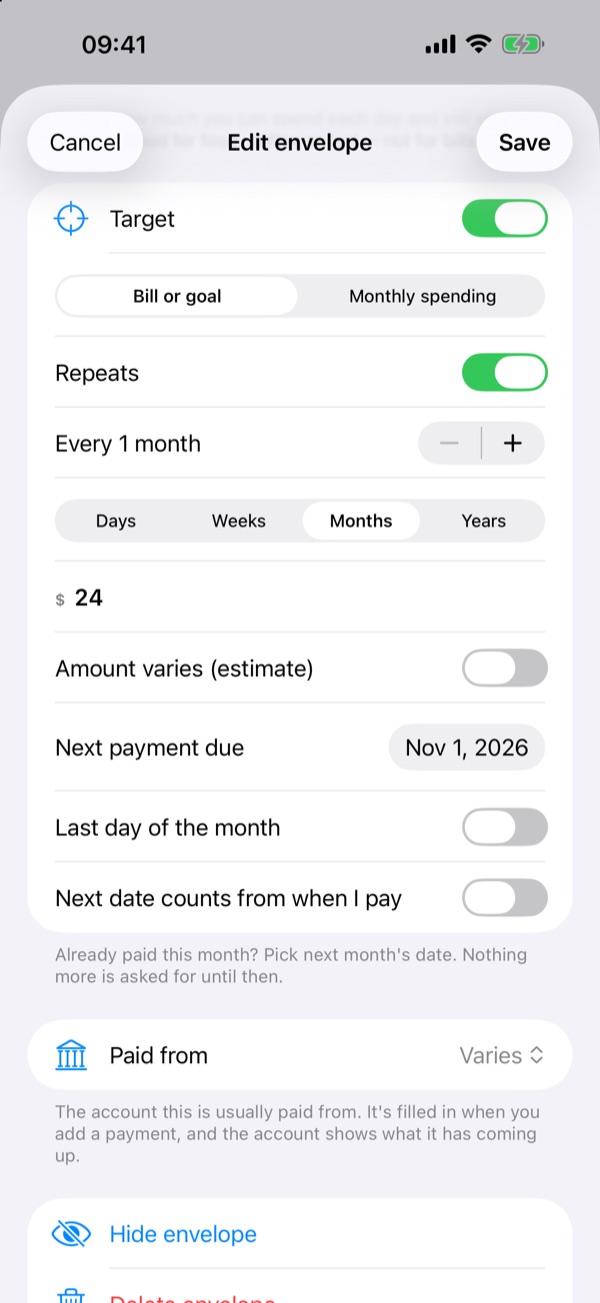
Each envelope can have a Target:
- Monthly spending is the flexible envelope.
- Bill or goal covers the other two. Turn on Repeats for a bill. For a goal, leave it off and set Needed by to the date you'd like it by.
Free for two weeks, then a one-time purchase. No subscription.
General information only, not financial advice. Think about your own situation, and talk to a qualified professional before big financial decisions.